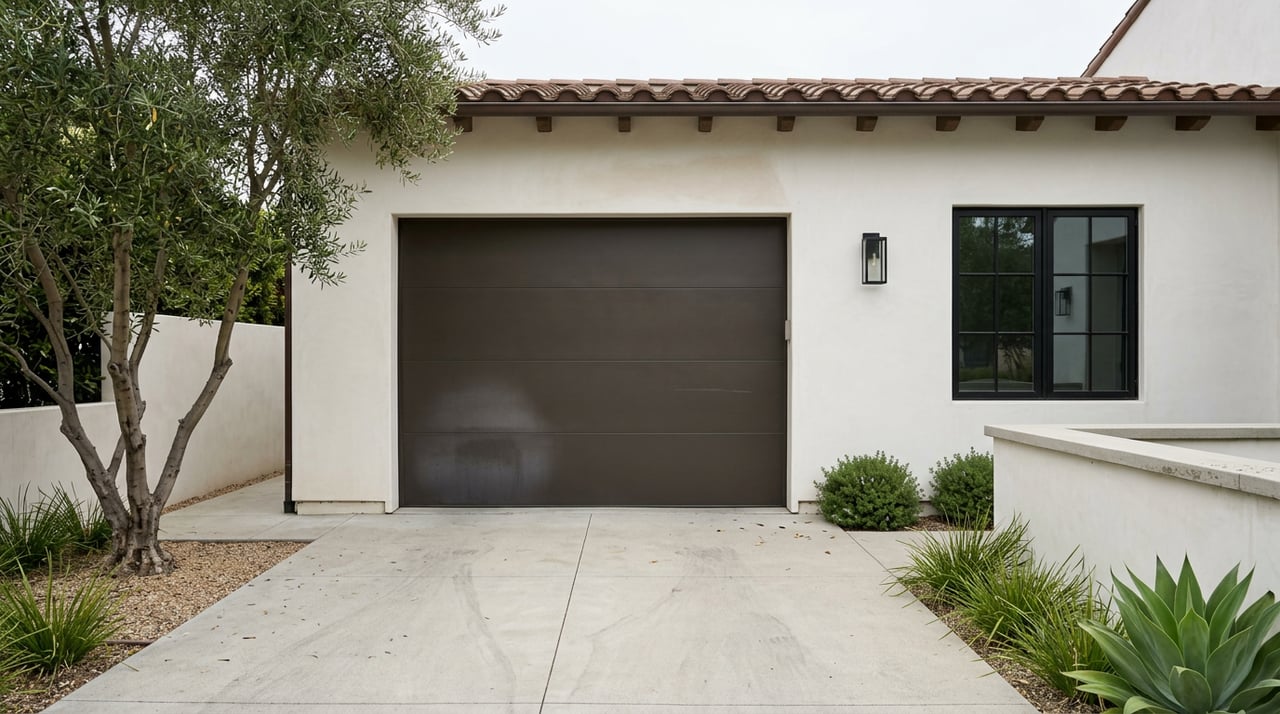
A seller in Belmont Heights lists her three-bedroom bungalow. Two streets over, in the same zip code, another homeowner lists a nearly identical house. Both garages are clean, both driveways are clear, both cars park exactly where they should. Yet one seller signs and submits a city report before closing. The other does not.
The difference has nothing to do with either garage. It has to do with a boundary drawn on a city map, one most homeowners have never seen and never had reason to look for.
Long Beach runs something called the Garage Resale Program, and it is one of the few requirements in Southern California real estate that is triggered entirely by where a parcel sits, not by what the seller has done to the property. Understanding it before you list saves a step in escrow. Skipping it is how sellers end up scrambling in the final weeks of a transaction over a form they didn't know existed.
The Map Decides Before the House Does
Long Beach has designated specific areas of the city as parking impacted. According to a Signal Tribune report on the city's parking pressures, the mapped areas touch parts of North Long Beach, Central Long Beach, Belmont Heights, Belmont Shore, Wrigley, and other pockets around the city. Property owners inside these boundaries who sell a residential building are required to sign off on a report confirming whether legally required off-street parking is actually available on the site, a requirement spelled out on the city's own program page.
Outside those lines, the requirement simply does not exist. A seller three blocks away, in an identical house with an identical two-car garage, has no report to file at all.
This is the part that catches people off guard. Most point-of-sale requirements in California scale with the condition of the property. A cracked sewer lateral triggers a repair requirement because the pipe is cracked. A missing smoke detector triggers a fix because the detector is missing. The Garage Resale Program does not work that way. It applies because of an address, independent of whether the garage inside that address is in perfect shape.
The city maintains a live Parking Impacted Areas map that any seller or buyer can check against a specific parcel. Checking it during listing prep, rather than after an offer is in hand, is the difference between a formality and a delay.
What Chapter 18.62 Actually Requires
The requirement is codified in the Long Beach Municipal Code as Chapter 18.62, Report on Available Off-Street Parking Spaces Upon Resale. In practice, it works through two paths. A property owner can request an inspection, and a Code Enforcement Bureau inspector confirms whether the required off-street parking is present and usable. Or, where a property qualifies, the owner can apply for a Garage Exemption Certificate instead of going through an inspection at all.
Both paths run through the city's Community Development Department, the same office that handles building permits, zoning, and code enforcement for the entire city. The city's own summary is direct about the intent: the program requires sellers within designated areas to sign off on a report on the availability of legally required off-street parking spaces.
Who Skips the Report Entirely
The exemption list matters as much as the requirement itself, because it reveals the second axis this rule actually runs on: not just location, but housing type.
Condominiums, townhomes, apartment buildings, and similar properties where parking is supplied through a shared common facility are generally excluded from the report requirement. So are properties where no off-street parking was ever built in the first place. A handful of other narrowly defined situations qualify for a Garage Exemption Certificate as well, issued through the same Code Enforcement Bureau process.
The practical effect: a single-family home in Wrigley faces this requirement in a way that a condo two blocks over, with parking supplied by a shared lot, does not. For buyers weighing a Long Beach condo against a Long Beach house, this is one more quiet difference in how each transaction actually closes, not just what each property costs.
How This Tends to Play Out
The city does not publish real-time statistics on garage resale inspections, but a city memo from December 2017, reviewing program activity from 2016, offers a useful picture of how these inspections typically resolve. That year, the city performed 1,054 garage resale inspection requests. Roughly 80 percent of properties were found compliant on the initial inspection. For the remainder, compliance was typically reached within about 30 days, or before the transaction closed.
That data is now a decade old and should be read as a pattern, not a current statistic. What confirms the program is still very much active today is more recent: the city's Garage Resale Program fee schedule was updated in 2025, and the Community Development Department continues to list the program alongside code enforcement and short-term rental oversight as one of its active functions in 2026.
For a seller, the historical pattern is worth knowing for one reason: most properties pass without incident, but the ones that don't tend to need something close to a month to resolve. On a standard 30-day escrow, that timeline can eat the entire window if the inspection is requested late.
The Retrofit List Runs on a Different Axis
It helps to separate the Garage Resale Program from the other point-of-sale requirements Long Beach sellers commonly encounter, because they work on entirely different logic. Long Beach requires working smoke detectors in every bedroom, in bedroom hallways, and on every floor, along with a carbon monoxide detector on each level. Water heater tanks must be double strapped, though tankless units are exempt. Toilets and showerheads must meet low-flow standards.
These items apply based on the condition and equipment of the house itself, the same way they would in most California cities. They are not tied to a map boundary. A seller can address every one of them regardless of which side of the parking impacted line their home falls on.
The Garage Resale Program is the outlier. It is the one requirement in a Long Beach sale that has nothing to do with fixing anything, and everything to do with where the parcel happens to sit.
What This Means for Listing Prep
The practical takeaway for a seller is straightforward, even if the rule itself is not. Before a home goes on the market, it is worth checking the parcel against the city's parking impacted areas map, confirming whether the property qualifies for an exemption certificate rather than a full inspection, and if an inspection is needed, requesting it early enough that a 30-day resolution window does not collide with escrow. None of this shows up on a standard pre-listing checklist built for a generic California sale, because it is not a generic California requirement. It is a Long Beach one.
Frequently Asked Questions
How do I find out if my Long Beach property is in a parking impacted area? The city publishes a Parking Impacted Areas map that can be checked by address. Confirming this before listing avoids finding out from a buyer's agent mid-escrow.
Does the Garage Resale Program apply to condos and townhomes? Generally, no. Properties where parking is supplied by a shared common facility, which includes most condos, townhomes, and apartment buildings, are typically exempt from the inspection requirement.
What happens if my garage does not comply? Based on the city's own historical program data, most properties that fail an initial inspection reach compliance within about 30 days. Building that timeline into your escrow calendar early prevents it from becoming a closing delay.
Is this the same as the smoke detector and water heater retrofit requirements? No. Those items apply based on the physical condition of the house and are separate from the Garage Resale Program, which applies based on the parcel's location within a designated area regardless of the garage's condition.
Long Beach rewards sellers who know exactly which rules apply to their specific address, not just the ones that apply citywide. If you are preparing to list a home in Long Beach, or comparing what a house versus a condo actually requires before closing, Marie Morgenstern can walk through the specifics for your property well before they become a surprise in escrow. Let's Connect.